
Project Manage your Depression
Is it really that simple?

I’m going to lead off with a big caveat today.
I’m neither a doctor, a medical professional, nor a project manager. I don’t claim that what I’m doing here is universal. It’s more of a thought exploration.
Don’t forget that part. It’s important.
So, a few years ago I took Google’s Project Management course on Coursera. I even paid for it. It was life-changing; I learned all about the documents of project management as well as why it's important and what it is. I think I would be a great Project Manager, but no one listens to me so maybe not.
I’m going to see if I can’t apply that to my personal struggles with mental health issues.
So, project management.
To me, project management is all about managing expectations. I’m also an Agile fangirl, so this will be based on that framework. Let’s do some definitions.
Agile/Scrum
Agile/Scrum is a framework for approaching a project. There are a lot better resources than me for a good definition, but I’ll try. Basically, the concept is to define a project as ongoing until it isn’t. Agile sucks for construction projects because those have a fixed permanent goal; do things in the right order and you get a sidewalk, or whatever. Agile excels when there is no endpoint. For example, say you are writing a comic book series. The series goes on until it doesn’t. Along the way you make a series of deliverables (the individual volumes) and in theory the story ends when no one wants to make it or pay for it anymore.
Deliverables
These are the things you get as you complete the project. For example, in a comic book a deliverable might be each volume. It could also be a certain number of panels, colored panels, lettering, whatever.
Project
A project is the thing you are doing. Duh. Good examples are things like a birthday party. You do some tasks, you finish on time and on budget, and the party meets your success criteria. Somehow your daughter still cries.
Sprints
A sprint is the smallest time element of a project (not really, but bear with me). Generally a spring is a two-week (or so) timeline where you complete a certain number of tasks and end up with a viable deliverable. At this point the project could be over or the stakeholders might want more and to continue.
Success Criteria
Success criteria are the goalposts. If you are playing American Football (better you than me) and there are no goalposts and no yard markers, how do you know whether you’ve succeeded in getting a touchdown? Similarly if you are writing a comic book how do you know if it’s popular? Profitable? Interesting to readers?
The key to a good success criteria is that it needs to be measurable, time-limited, and specific. Money is a great success criteria: I want my comic book to earn $5000 after taxes through royalties in the first year.
Task
A task is one step you need to take to move towards completing a deliverable.

Now lets apply these principles to Mental Health.
Agile Mental Health
Mental Health as I’ve experienced it doesn’t have a finish line. Every single day I will be working with my brain, my doctors, my meds, and my body to manage it. I will never be cured, because my mental health is intrinsically part of who I am. Aspects of my mental health struggles keep me honest, help me create, and help me understand and process the world around me and my place in it.
I don’t even want to be cured.
I want to be managed.
Managing a project relies heavily on time-keeping and accountability. If I assign myself a task and then don’t do it, the project is held up until I get my ass to do it. That’s no way to achieve anything. The solution is sprints.
For me, the most logical sprint interval is the time between therapy sessions. This has varied over my lifetime, but it’s looking like two weeks is the magic number right now. For certain reasons, my cycles of mood and stability tend to dip around Friday or Saturday. This means that I need to accomplish the work of the sprint leading up to that trough so I can observe their effect on mediating those dips. Then a talk with my therapist early the next week gives me a chance to self-report and receive advice or affirmation.
Deliverables and Documentation
So how do we get started? The project plan.
The project plan is where you list out everything that matters and get it fixed in front of you. It should include things like who is on your team, the high level goal, the budget, the timeline. All that stuff is vital, but defining your deliverables is the first step in building your project plan. What do you even want out of mental health?
For me this is at once the easiest and hardest part. But here’s some ideas,
I want to have enough energy to do things.
I want to not feel hopeless when I’m alone.
I want to feel like I have control over some things.
I want to be someone other people want to be with.
What does Success Look like?
Let’s talk about energy.
So now that I know what I want to accomplish, how will I know when I get there? Good success criteria have a lot of important parts, but first and foremost, they must be measurable.
I can measure energy to do things by creating a list of the things I might want to do every day. This could be simple stuff like taking a shower or flossing. It can be creative output like writing a certain number of words or time spent drawing. It can be exercise-related. And all of these are things I put in my habit tracker.
Now measuring is simple: how many things did you complete on the tracker during this sprint interval? Did you clear the bar you set? Have you improved by 10% over the last interval?
Tying it to the sprint also ensures that it is time-limited. Someday is a terrible time limit. I’m of the opinion anything longer than a month is too. You don’t have to achieve the project in two weeks, just need to complete the tasks.
Welcome to the Sprint Retrospective.
In Agile Scrums the sprint retrospective is your chance to celebrate with your team what you’ve accomplished. If you’ve been accountable to yourself there shouldn’t be any rude surprises. Journaling is an excellent way to do your retrospective. What did you accomplish? What was hard and why? What is your plan to fix that? Where are you going next?
The key to answering those things is mindfulness. In software development a daily standup is a great way to accomplish this. Everyone takes a minute to describe what they are working on and what they finished, but also what they need to succeed. Take 10 minutes at the beginning of your day and just reflect. How did yesterday go? Are you going to finish your assigned tasks? What do you need to change?
Defining Tasks
Lastly, let’s look at the tasks.
These are the actually building blocks of your goals. If my goal is to have control over some things in my life, what set of steps gets me there?
Define something you want to take control of. For example, money.
What are the sub-components of money? Retirement, Savings, Emergency Fund, College Money.
Lets take Retirement. How do I take control? Open an account. Set up a regular deposit (even $1 per check, something). If your company matches 401k, find a way to max that out. Open an IRA (roth if possible) and fully fund it.

I would love to retire to someday. Hint, hint. Some of those are single steps, but some of them are multi-step. Break them down further. Does my company have a 401k match? How do I open the account? How do I set my contribution? How can I reduce expenses by 6% to fund it? Do I want the default investment plan? What are my options?
Just break it down until every goal is small, manageable tasks, and then add them to… your Backlog!
The backlog is the master list of all the tasks you could do. Every time you break down a goal further, add it to the backlog. During your sprint retrospective pick out a few and add them to the sprint tasks.
Now if you want to be really cool, make a burndown chart. Go look them up: they are a great way to visualize your progress.
Conclusion
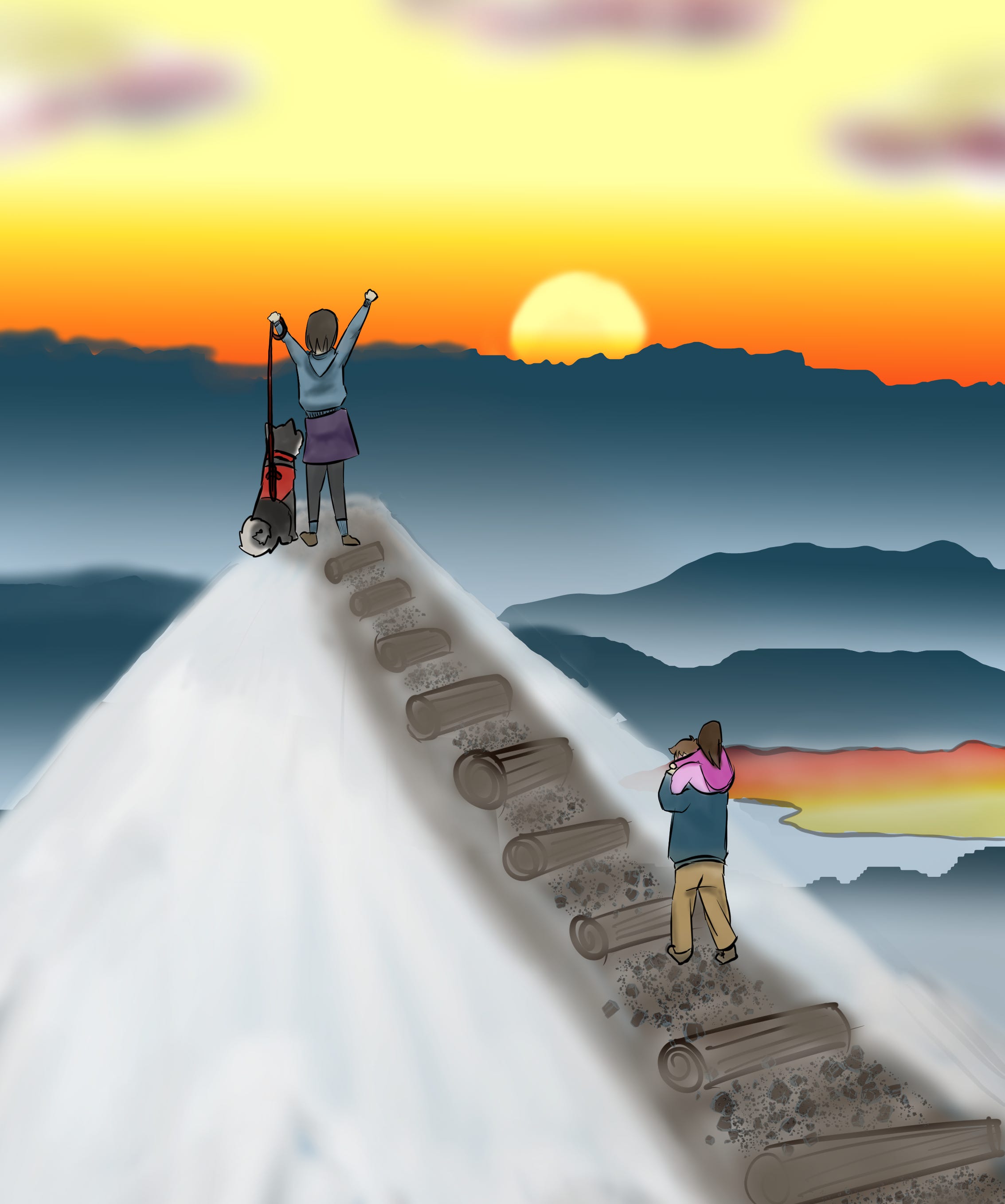
I don’t know if this is useful to anyone: I’m not sure it’s even useful to me. The point of this article is just to create a framework to approach the topic in a new and to me novel way. Mental health is hard. It’s probably the toughest project I’ve ever been a part of. It’s even harder without a plan.
If it’s helpful or insightful to you, drop a comment below!
If anyone is really interested maybe I’ll even show you my project plan.
I found the article very interesting. As I went along, I thought of areas where my life isn't working smoothly or flyers after a few weeks before they become habits or boredom ensues.
I'll need to reread and see if I can make a sprint!
I should to!
I still haven't decided what healthy looks like and I'm trying to find an answer